
Scroll through any home design feed today and you’ll see it: a cozy but effective room tucked between the kitchen and the dining space, floor-to-ceiling with open shelving. Everyone wants one.
At Nixon Custom Homes, we’ve been designing and building luxury kitchens (that include butler’s pantries) across custom projects for years. What we’ve learned is that no two are alike, and they shouldn’t be. The best ones are tailored to exactly how a family lives: how they entertain, how they shop, and how much of a mess they’re willing to show the world.
Here’s how we think about them, from the first conversation to move in day.
Why the Butler’s Pantry Is Back
The butler’s pantry isn’t a new idea. In the 19th century, it was a dedicated prep and staging room between the kitchen (where servants worked) and the dining room (where guests ate). It held china, crystal, linens, and silver. It buffered sound and sight lines. It was purely functional, and it was brilliant.
For most of the 20th century, open-concept design made these rooms disappear. But as countertops became gathering spaces rather than just work surfaces, the need for somewhere to hide the chaos came roaring back.
Today’s butler’s pantry serves a different master than its Victorian predecessor. It’s not about separating a household staff from guests. It’s about giving the host a place to breathe: to stage a dinner party without cluttering the main kitchen, to stash the Central Market haul without sacrificing a clean aesthetic.
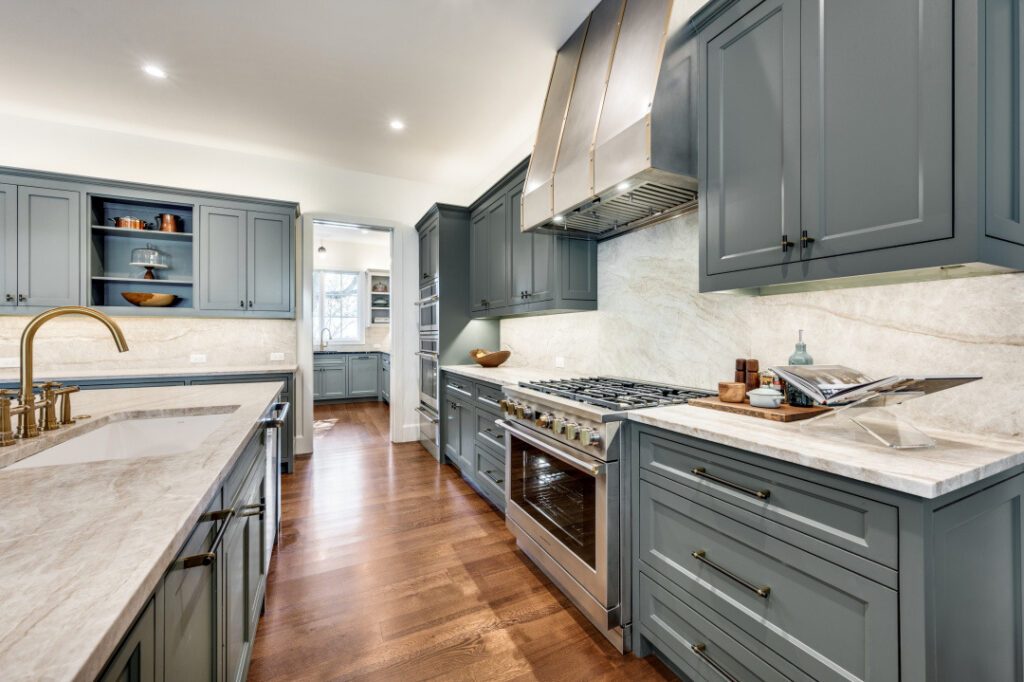
What a Butler’s Pantry Really Is (and Isn’t)
We find it helpful to clarify this early in a project. A butler’s pantry is not simply extra storage. It’s not a walk-in pantry, though it can include one. It’s not a mudroom, a wet bar, or a prep kitchen, though elements of all three can live inside it.
Think of it as a transitional room with its own purpose: it connects the kitchen to the dining or entertaining areas of the home, and it absorbs the work and storage that would otherwise overwhelm the main kitchen.
In practice, this means it needs to function independently. That usually means its own countertop workspace, its own storage system, and in many cases, its own sink and appliances.
The 6 Decisions We Make on Every Kitchen Design Project
01. Location and Flow
The most common mistake we see in butler’s pantry designs from other builders is treating the location as an afterthought. A butler’s pantry that requires you to walk the long way around the kitchen, or that sits behind a closed door no one thinks to open, will simply never be used.
We position the butler’s pantry at the intersection of two traffic patterns: the path from kitchen to dining, and the path from the garage or delivery entrance into the home. That way it captures both entertaining flow and everyday grocery storage in a single room.
02. Scale and Square Footage
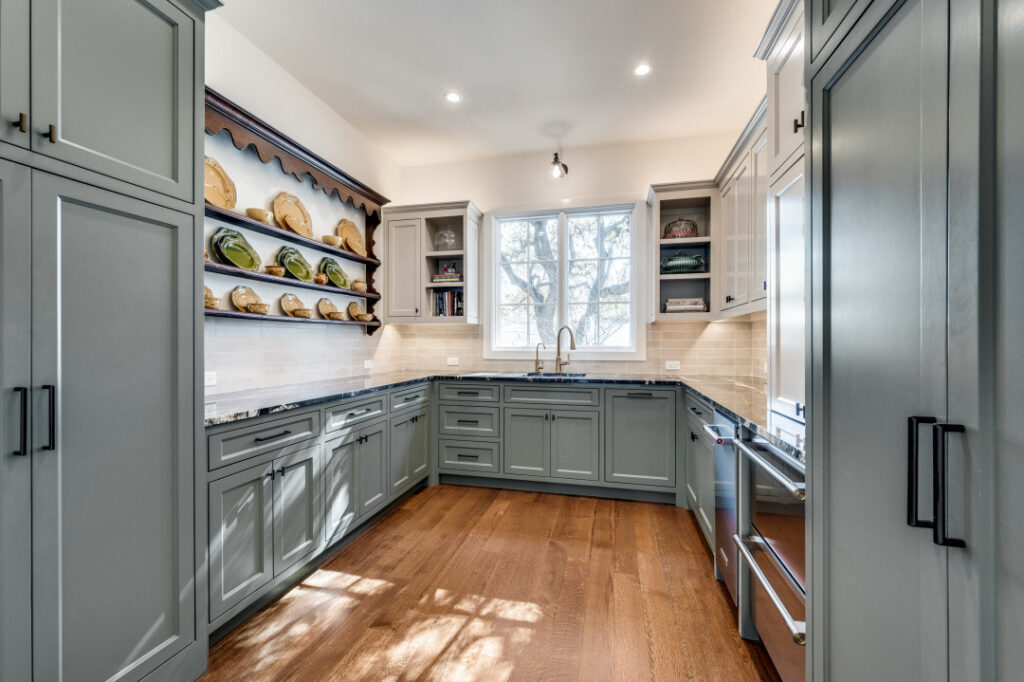
A butler’s pantry can be as compact as a deep hallway or as generous as a full second kitchen. We’ve built both, and neither is inherently better.
For most of our clients, we target a minimum of 80 square feet when the room will include a sink and dedicated appliances. Below that threshold, the room starts to feel more like a closet than a functional workspace.
03. Storage Architecture
Butler’s pantry storage typically falls into three categories, and we try to include a thoughtful mix of all three in every project.
The first is open display: shelving for glassware, ceramics, and serving pieces; plate racks at eye level; interior cabinet lighting that makes the space shine. The second is concealed storage: deep lower cabinets for small appliances and bulk goods, linen drawers, lockable wine storage, and pull-out shelving so nothing gets lost in the back of a deep cabinet.
The third category is what we call task storage, designed around a specific activity. This might mean deep drawers with inserts sized precisely for serving spoons and tongs, a built-in coffee station with a drawer for pods and filters below, or a charging drawer for the devices that migrate to every counter in the house.
04. Appliances and Utility
Not every butler’s pantry needs a second dishwasher. But more of our clients ask for one every year, and once they have it, they can’t imagine hosting without it. A second dishwasher in the butler’s pantry lets you clear glassware from the dining table, run a quiet cycle during dinner, and have everything clean before dessert is served.
Beyond the dishwasher, the appliances we most commonly specify are an under-counter beverage or wine refrigerator, a prep sink, a warming drawer, a steam or speed oven for serious entertainers, and an ice maker, which is the single appliance clients most frequently tell us they wish they’d added.
Rule of thumb: if you entertain more than eight guests more than six times per year, plan for a second dishwasher and a prep sink at a minimum.
05. Finishes and Atmosphere
Here’s where the design gets genuinely fun. Because the butler’s pantry is adjacent to but distinct from the main kitchen, it gives us agency to do something different. It doesn’t have to match. In fact, the best butler’s pantries we’ve built have a slightly different personality than the kitchen next to them.
We often use the butler’s pantry as the place to introduce a darker, richer, more layered aesthetic: moody navy or deep forest green cabinetry, more movement than the quieter tones of the main kitchen. A patterned tile floor that would feel too busy at full kitchen scale reads as sophisticated in a smaller room.
06. The Mistakes We Help Clients Avoid
All open shelving with no closed storage looks beautiful in photos but is exhausting to maintain. A single-width doorway becomes a bottleneck the moment you’re carrying a tray of glasses; we target 36 to 42 inches. Skipping the sink to save budget is a decision nearly every client reverses within five years. And forgetting a thorough outlet plan is easy to do in the design phase but painful to live with, since small appliances come up quick.
The Room That Changes Everything
The best butler’s pantries we’ve built have one thing in common: the homeowners didn’t fully understand how they’d use the room until they moved in. The plan showed storage and a sink. The reality was a staging area for every dinner party, a quiet coffee station on weekend mornings, a place where the Thanksgiving prep actually happened without chaos spilling into the kitchen.
Designing a room for a life you haven’t lived yet requires some imagination, and a builder who asks the right questions. At Nixon Custom Homes, we spend time in the early design phase walking through your actual entertaining habits, your storage pain points, and the way your family moves through the home. The butler’s pantry, more than almost any other room, rewards that specificity.
Build Your Luxury Custom Home in Dallas
With decades of experience crafting luxury homes in Dallas’s most desirable neighborhoods, Nixon Custom Homes helps clients find their flow in Dallas & build the home of their dreams.As an award-winning builder, we deliver exceptional home construction that lasts. Schedule a consultation today to get started.